
When a storm is in the forecast it’s natural to worry about your family and your home. You may already have supplies on hand and have talked about where you’d go if you needed to leave. Even with that preparation, you still might wonder whether you’ve thought of everything.
September is National Preparedness Month, an opportunity to take another look at your family’s disaster plan and fill in any gaps. We’ll walk through the details that can be easy to overlook, from arranging help for a relative to having your insurance information available when you need it, so you can build on the preparation you’ve already done.
What should your family disaster plan include?
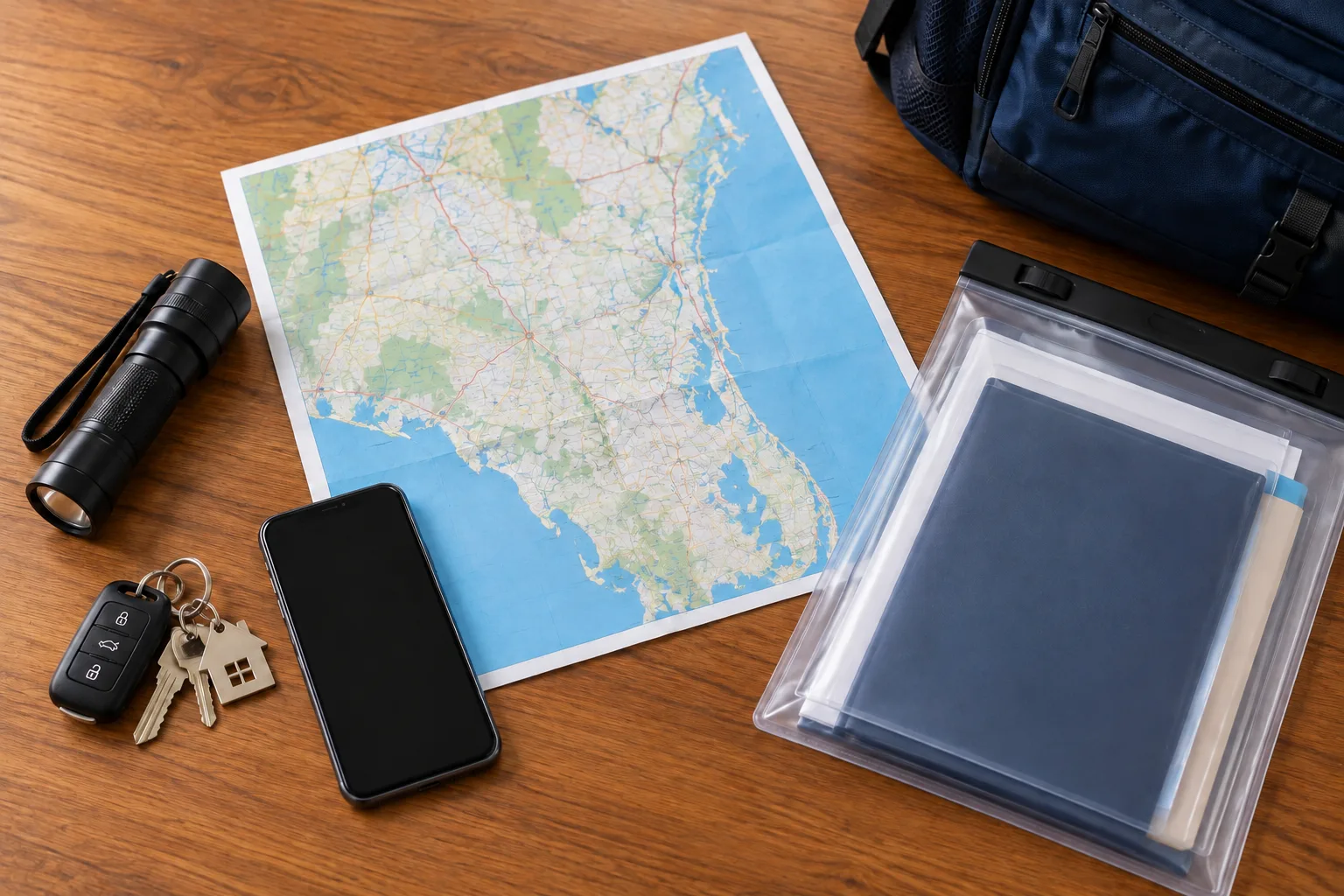
A family disaster plan should explain where you’ll go, how you’ll get there, and how you’ll stay in touch if you’re apart. It should also account for anyone who needs help leaving home and the supplies and documents you’ll take with you. Those documents should include:
- Photo IDs
- Copies of insurance policies
- Prescription and medical information
- Emergency contact numbers
- Pet vaccination records
Copies of birth certificates, property deeds or leases, and any custody or power-of-attorney documents relevant to your household can go in a waterproof folder with them.
Your plan should also identify who may need help getting to safety. For families with children, that may mean checking school pickup procedures and choosing a backup person who’s authorized to help. For someone caring for an older relative, it may mean arranging a ride and a place to stay that can accommodate their needs.
Where would you go if you needed to evacuate?
A relative’s home outside the area at risk may be an option, provided you’ve discussed it with them. Having a second destination gives you an alternative if the storm threatens that location too.
Visit Florida’s Plan & Prepare resource for preparedness information, and check with your county emergency management office for local evacuation instructions and shelter information. Check your evacuation zone ahead of time and follow evacuation orders. If you live in a manufactured home, ask about evacuation guidance for your home type as well as your location.
Anyone who needs transportation assistance or uses powered medical equipment may need additional arrangements. Your county can explain available assistance and any registration requirements before a storm approaches.
Pets also affect where you can stay. A hotel, shelter, or family member’s home may have restrictions, so confirm whether pets are welcome and what supplies or vaccination records you’ll need to bring.
How will you stay in touch if you’re separated?
Choose a meeting place in case you can’t get home and an out-of-area contact who can relay updates. Everyone in the household should have those details, with a paper copy available if a phone is lost or its battery dies.
When you review the plan together, include anyone you’ve asked to help with transportation, children, or relatives. They may have work schedules or other responsibilities you’ll need to plan around.
What supplies will your household need?
Florida recommends keeping at least seven days of supplies. Its disaster supply checklist includes one gallon of water per person per day. For a family of four, that’s 28 gallons for a week, plus water for pets.
Your household’s everyday needs belong on the list too, from baby formula to hearing-aid batteries or food for a restricted diet. A pharmacist or healthcare provider can help with questions about prescription refills and medication storage during an emergency.
As you gather supplies, consider which items you’ll take if you evacuate. Pet carriers, medications, and essential documents need to be accessible when it’s time to leave.
Which insurance records should you have ready?
Keep your policy number, your agent’s contact information, and your insurer’s claims number with your emergency documents. Include your declarations page, which summarizes your coverage amounts and deductibles. A secure digital copy and a paper copy in a waterproof container give you options if you can’t access one of them.
Photos or a video of your home and belongings can help document what you owned and its condition before a loss. During a room-by-room walkthrough, include items inside closets and cabinets. Receipts for larger purchases can be kept with those records. Save a backup somewhere you can access if your phone is lost or damaged.
Our article on what to do after a hurricane explains the insurance steps following a property loss.
What coverage questions are worth asking before a storm?
Your hurricane deductible is a useful place to start. Knowing the dollar amount helps you consider how you’d pay your share of a covered loss. Your agent can explain the deductible shown on your policy and answer questions about your coverage.
Flood coverage deserves a separate conversation. Standard homeowners insurance generally doesn’t cover flooding, including storm surge. Flood insurance has its own terms, and new coverage may have a waiting period. If you’re unsure whether you have it, ask your agent before a storm threatens.
You can also ask how your policy addresses temporary living expenses if covered damage makes your home uninhabitable, including the conditions and limits that apply. If you’re budgeting for an evacuation, ask specifically whether any hotel or meal costs would qualify for reimbursement under your policy.
Review the plan together
A quick walkthrough can reveal a transportation conflict or supplies that won’t fit in the car. Revisit the arrangements when your household changes, especially after a move or a change in someone’s care needs.
If you’re already insured with American Traditions Insurance, your agent can help you review your coverage and deductibles as part of that planning. Looking for coverage for your home? Request a quote with American Traditions Insurance or find an agent near you to discuss your options.
About American Traditions Insurance
American Traditions Insurance brings more than two decades of property insurance experience and serves homeowners with over 140,000 policies. We offer specialized coverage for site-built homes, manufactured homes, and condominiums through a network of independent agents, with personal service and online tools to help homeowners manage their coverage. Learn more about American Traditions Insurance.
